





















YTÜ and KAEÜ Unveiled the AI-Powered IQMS
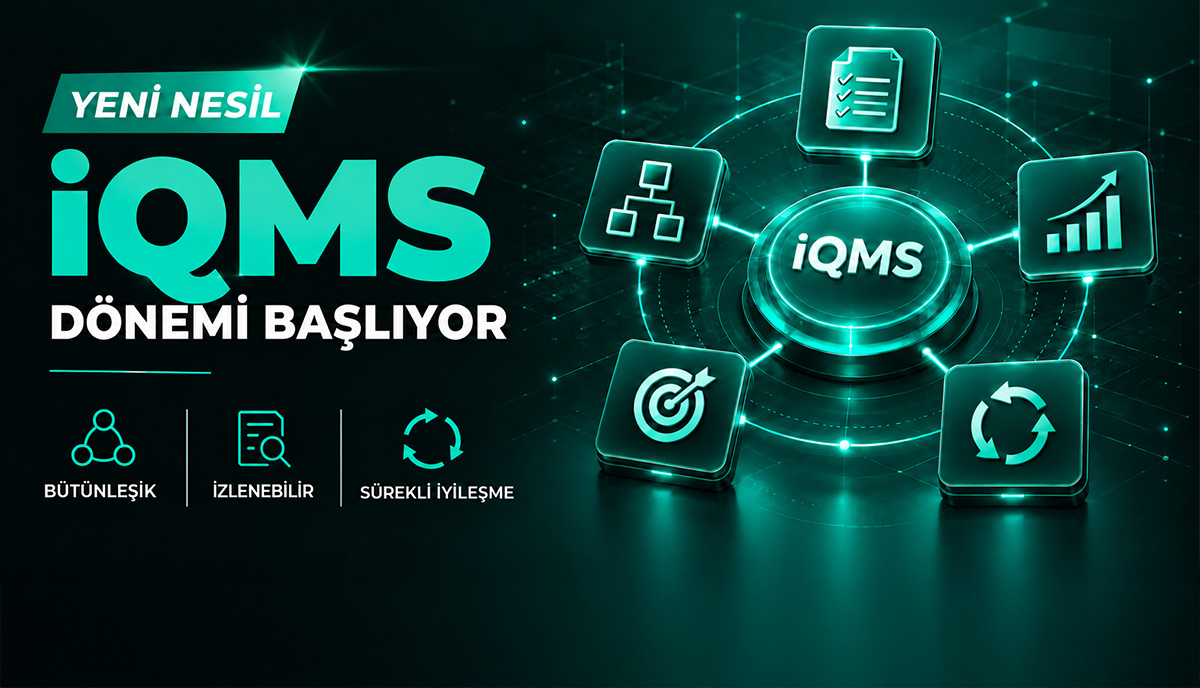
A presentation was held for IQMS, a new-generation, AI-powered quality management system developed in collaboration between Yıldız Technical University and Kırşehir Ahi Evran University. The system, which integrates data on strategic planning, performance, risk, stakeholders, improvement, and accreditation, aims to provide an intelligent governance infrastructure that supports managers’ decision-making processes through AI-powered analytics.
The new-generation AI-powered quality management system IQMS, developed in collaboration between Yıldız Technical University (YTÜ) and Kırşehir Ahi Evran University (KAEÜ), was introduced during an online meeting. The presentation of IQMS—which brings together the two universities’ knowledge and experience in the fields of quality management, corporate governance, digital transformation, and software development—covered the system’s core modules, administrative dashboards, AI-powered analytical capabilities, the data transfer process, and future development goals.
The meeting was attended by YTÜ Rector Prof. Dr. Eyüp Debik, YTÜ Vice Rector Prof. Dr. Vatan Karakaya, Kırşehir Ahi Evran University Rector Prof. Dr. Mustafa Kasım Karahocagil, KAEÜ Vice Rector and Quality Management Coordinator Prof. Dr. Hüseyin Şimşek, as well as administrators from both universities, quality management representatives, and software experts involved in the system’s development.
From Quality Management to Smart Governance
IQMS aims to transform quality management systems from structures where data is merely recorded and periodic reports are prepared into a smart governance system that supports institutional decision-making processes.
The system enables the integrated management of strategic plans, administrative processes, performance indicators, activities, risks, stakeholder relationships, documents, satisfaction reports, and improvement initiatives.
By consolidating data generated across different units into a common data model and establishing relationships between them, the system aims to enable managers to access the information they need through a single platform. This makes it possible to monitor the organization’s status not only through periodic reports but also via real-time data and executive dashboards.
The goal is for this structure to make decision-making processes faster, measurable, traceable, and data-driven.
Artificial intelligence will analyze data to support decision-making processes
One of IQMS’s standout features is its ability to analyze data generated across various organizational processes using artificial intelligence, transforming it into meaningful and actionable insights for managers.
The system is designed to aggregate data from different modules to analyze organizational performance, identify changes in metrics, detect deviations from targets, and bring priority areas for intervention to the attention of managers.
With its AI-powered reporting infrastructure, the system aims to enable managers to evaluate not only numerical results but also what those results signify, where problems are concentrated, and which areas require improvement.
The goal is for organizations to understand not only “what is happening” but also “why it is happening” based on the data, enabling them to determine next steps more quickly.
Key metrics can be monitored from the executive dashboard
The IQMS Executive Dashboard will provide managers with a comprehensive overview by consolidating critical information across the organization’s various management areas onto a single screen.
Performance indicators falling below target values, activities not completed on time, high-risk issues without assigned responsibility, the status of strategic plan implementation, and performance discrepancies between departments can all be tracked via the dashboard.
Through charts and alert areas, the goal is to enable managers to directly identify issues requiring immediate attention—rather than having to review large volumes of data individually—and to direct organizational resources toward priority areas.
Strategic planning, performance, and risk management come together in a single platform
IQMS’s Strategic Plan Management Module will enable the integrated tracking of the organization’s objectives, targets, and performance indicators. The achievement levels of strategic targets, critical indicators, and performance trends over the years can be monitored through the system.
The plan is to identify indicators that fall below threshold values or deviate from targets and bring them to the attention of managers. Performance indicators can be linked to the strategic plan, processes, units, activities, and organizational goals.
The Risk Management Module is designed not only to record risks but also to evaluate their development, sources, potential causes and consequences, related processes, control activities, and the measures taken.
By analyzing changes in process data using performance indicators, the system aims to identify potential risks at an early stage and provide early warnings to managers.
Quality standards and accreditation processes will be managed on a single platform
With IQMS’s Quality Standards Module, the goal is to manage various evaluation frameworks—such as higher education quality assurance, institutional and program accreditations, ISO management systems, and the EFQM Model—through a single system.
Quality standards can be linked to the institution’s processes, performance indicators, activities, and supporting evidence. This approach aims to prevent the repeated reporting of the same institutional practices for different evaluation processes and to enable the use of shared data across multiple evaluation processes.
The system will also enable the preparation of quality reports, the classification of evidence, the assessment of maturity levels, and the identification of areas for improvement.
Integrated and Modular Structure
IQMS is being developed as an integrated and modular system that brings together the applications organizations need in various management areas on a common infrastructure.
The system includes core modules such as strategic planning and performance management, process and activity management, risk and improvement management, quality standards management, stakeholder and satisfaction management, task, calendar, and document management, user and authorization management, communication, announcements, and support management, as well as reporting and analysis.
Thanks to the data relationships between the modules, a performance indicator can be evaluated in conjunction with the relevant strategic objectives, processes, units, activities, risks, and improvement initiatives. This will ensure that organizational activities are tracked within an integrated management model that serves common goals, rather than as independent records.
Corporate memory will be preserved, and data will be transferred in a controlled manner
It is planned to transfer data on strategic plans, processes, activities, performance, risks, stakeholders, satisfaction, and improvement—which have been generated over the years in existing systems—to IQMS in a controlled manner.
The data migration process will be carried out in phases, including analysis, cleansing, transformation, implementation, and beta testing.
Priorities during the process will include maintaining data integrity, identifying missing or duplicate records, performing user and authorization checks, verifying relationships between modules, and ensuring continued access to historical data.
The goal is to enable the comparison of historical data with results from the new period, track long-term development trends, and preserve the universities’ institutional memory.
It will integrate with the university’s digital systems
IQMS’s Electronic Document Management System is planned to be developed to integrate with the Student Information System, Personnel Information System, learning management systems, e-Government applications, institutional databases, and API services.
Through these integrations, the goal is to automatically transfer data from various systems into IQMS, reduce duplicate data entry, and ensure that up-to-date data can be used in managerial analyses.
By preventing the same data from being entered repeatedly by different departments, the system aims to reduce the workload on users and enhance data accuracy.
Role-Based and Traceable Management
In IQMS, different access levels can be defined based on users’ roles, permissions, and responsibilities. Data entry, verification, approval, monitoring, and reporting processes will be conducted on a permission-based basis.
By logging all operations performed on the system, it will be possible to track which operation was performed, by which user, and when. This structure is designed to support the principles of accountability, transparency, data security, and corporate responsibility.
Continuous improvement will be tracked in the digital environment
At the core of IQMS lies a continuous improvement approach consisting of the planning, implementation, monitoring, and improvement phases.
The organization’s goals, activities, performance results, risks, and improvement efforts will be tracked in an interconnected manner. Indicators showing low performance levels, delayed activities, realized risks, stakeholder feedback, and evaluation results will serve as inputs for improvement efforts.
The responsible parties for initiated improvements, their completion timelines, and outcomes will be tracked through the system, allowing for an assessment of the initiatives’ contribution to organizational performance.
YTÜ’s technical and academic expertise is being integrated into the project
IQMS is being developed by bringing together Kırşehir Ahi Evran University’s experience in quality management and the implementation of the Integrated Quality Management System with Yıldız Technical University’s technical and academic expertise on a common working platform.
The collaboration between the two universities encompasses various fields, including quality management, process design, organizational governance, software architecture, data management, user experience, and artificial intelligence applications.
Developed with a flexible, scalable, and adaptable architecture, the system is intended for use in various organizational structures, primarily higher education institutions. Expanding IQMS nationwide and making it suitable for international use through its multilingual structure are also among the goals for the coming period.
Developed through a collaboration between YTÜ and KAEÜ, IQMS aims to contribute to higher education institutions’ digital transformation and governance capabilities by combining expertise in quality management with next-generation technologies. With the new system, the goal is to transition from a structure that merely records and reports results to a smart quality management approach that analyzes data, identifies deviations, provides early warnings regarding risks, monitors improvement efforts, and supports managers’ decision-making processes.
Other News