



























YÖK Awards Outstanding Achievement Award for a Doctoral Thesis Prepared at YTÜ
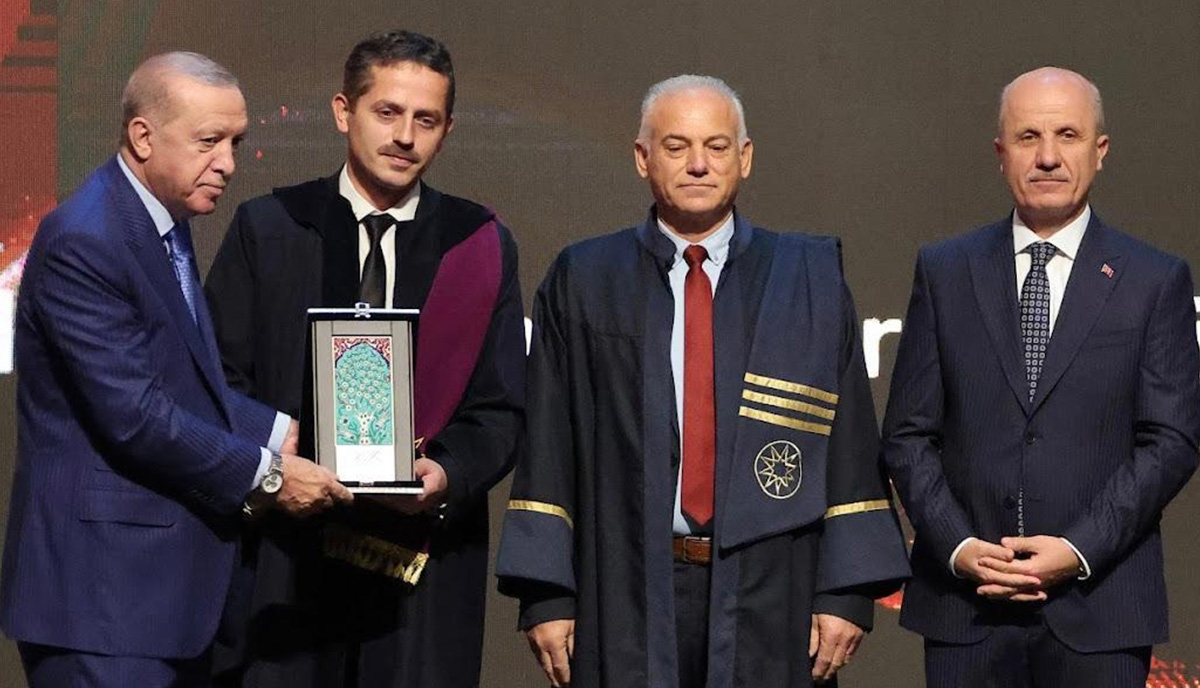
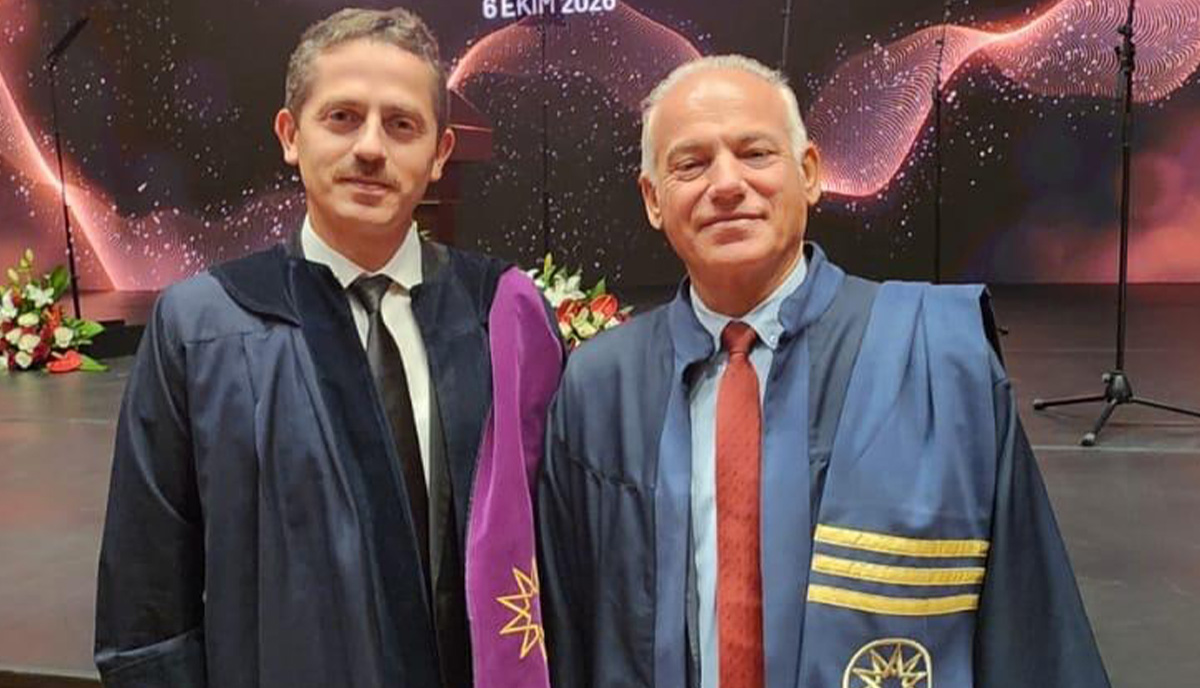
A doctoral dissertation titled “Academic Mobility and Knowledge Networks in Higher Education,” prepared at the YTÜ Institute of Social Sciences, was awarded the Doctoral Dissertation of the Year Award as part of the YÖK 2026 Outstanding Achievement Awards. The thesis author, Dr. Süleyman Yıldız, and his advisor, Prof. Dr. Aydın Balyer, received their awards from President Recep Tayyip Erdoğan.
The doctoral dissertation titled “Academic Mobility and Knowledge Networks in Higher Education,” was awarded the “Doctoral Thesis of the Year” prize as part of the Higher Education Council (YÖK) 2026 Outstanding Achievement Awards.
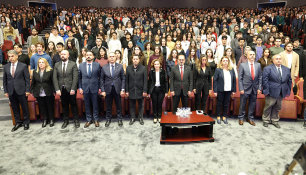
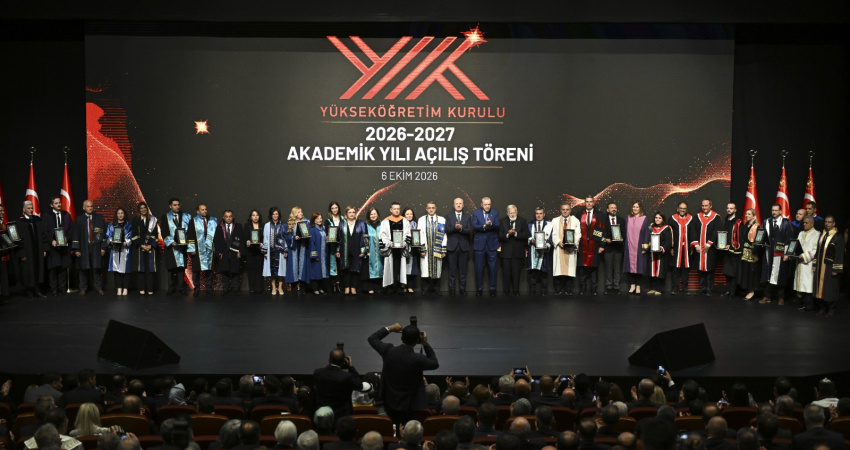
Dr. Süleyman Yıldız and Prof. Dr. Aydın Balyer received their awards from President Recep Tayyip Erdoğan during the 2026–2027 Higher Education Academic Year Opening Ceremony held at the Presidential Complex.
Congratulations from Our Rector
Our Rector, Prof. Dr. Eyüp Debik, wholeheartedly congratulated Dr. Süleyman Yıldız and his thesis advisor, Prof. Dr. Aydın Balyer, stating:
“It is a great joy for us to see our students’ determination in research, combined with our faculty members’ knowledge and guidance, lead to such valuable results. I wish both of them success in their future work, which will contribute to science.”
Reasons for Moving Abroad Were Investigated
Prof. Dr. Aydın Balyer stated that the starting point of his doctoral dissertation was to understand the academic mobility processes of students and academics leaving Turkey for abroad. Noting that Turkey sends undergraduate, master’s, and doctoral students, as well as researchers and faculty members, abroad through exchange programs and various scholarships, Balyer highlighted that significant resources are allocated to this process.
Balyer said that in the dissertation, they investigated the push factors driving students abroad and the pull factors making the destination countries attractive.
The causes of brain drain were addressed
Balyer explained that the second main focus of the thesis was brain drain—a topic that has been intensely debated in Turkey in recent years—and noted that they examined what percentage of young people who went abroad returned, what percentage remained in the countries they went to, and what factors shaped these decisions. He explained that the reasons students go abroad and choose to stay there were addressed within the scope of the thesis.
Knowledge networks established abroad were examined
Balyer explained that the third dimension of the thesis focused on the academic knowledge networks and international collaborations formed by students and academics who went abroad.
Noting that they also investigated whether students returning to Turkey maintained the academic connections they had established abroad and whether they developed new projects through these connections, Balyer said, “The study provides an important framework in terms of the efficiency of the resources Turkey allocates to higher education. It was recognized as worthy of an award for this reason,” he said.
Data and Findings for Higher Education Policies
Balyer noted that the thesis aims to provide a roadmap to contribute to the development of higher education policies, adding that the findings could serve as a resource for the Council of Higher Education (YÖK), the Ministry of National Education (MEB), and other relevant public institutions.
Balyer noted that they had the opportunity to examine certain issues in depth that could not be sufficiently revealed through surveys, and emphasized that the study draws attention to a social problem and could shed light on its solution. He thanked the YTÜ administration for their support throughout the process.
More than 400 scholarship recipients were reached
Dr. Süleyman Yıldız stated that they had developed a comprehensive survey for the quantitative aspect of the research and reached more than 400 scholarship recipients, saying:
“Our doctoral thesis was a very comprehensive study. We conducted the study using a mixed-methods approach. The main focus of the study was on researchers and academics from Turkey who engaged in academic mobility, particularly through scholarships from the Ministry of National Education. We examined the outcomes of these individuals’ international mobility from the perspectives of both the host countries and Turkey as the sending country.”
Yıldız noted that, as part of the qualitative dimension of the research, interviews were conducted with scholarship recipients who had gone to different countries, adding that these interviews allowed them to evaluate the survey data in greater detail.
Academic mobility leaves a lasting impact on careers
Yıldız stated that one of the study’s key findings was that academic experience abroad leaves a lasting impact on the careers of scholarship recipients.
Noting that scholarship recipients join international knowledge networks and maintain the collaborations they established during the scholarship program for many years after the program ends, Yıldız offered the following assessment:
“They establish and develop international collaborations in areas such as producing high-quality publications and utilizing the resources and research infrastructure of the universities they attend. Over time, these relationships evolve into lasting academic networks.”
International Academic Networks Are Being Brought to Turkey
Yıldız noted that the research also revealed that academic mobility has strengthened Turkey’s ties with international academic networks.
Stating that the fellows have largely brought the knowledge and collaboration networks they established abroad back to Turkey, Yıldız said that they conduct joint research with researchers in Turkey both during the fellowship period and afterward. He emphasized that these connections enable other researchers in Turkey to join international networks as well.
Yıldız noted that academic mobility programs play a significant role in the internationalization of higher education, adding that academic relationships established in different countries contribute to scientific research in Turkey.
Research Opportunities Influence the Decision to Return
Pointing out that academic mobility programs should also be evaluated in terms of brain drain, Yıldız said that research opportunities offered abroad can influence some scholarship recipients’ decision to return to Turkey.
Yıldız noted that the challenges faced by researchers studying abroad on MEB scholarships during their mandatory service period were also among the study’s findings.
Other News