



























Researchers Gathered at YTÜ to Discuss TÜBİTAK and Horizon Europe MSCA Opportunities
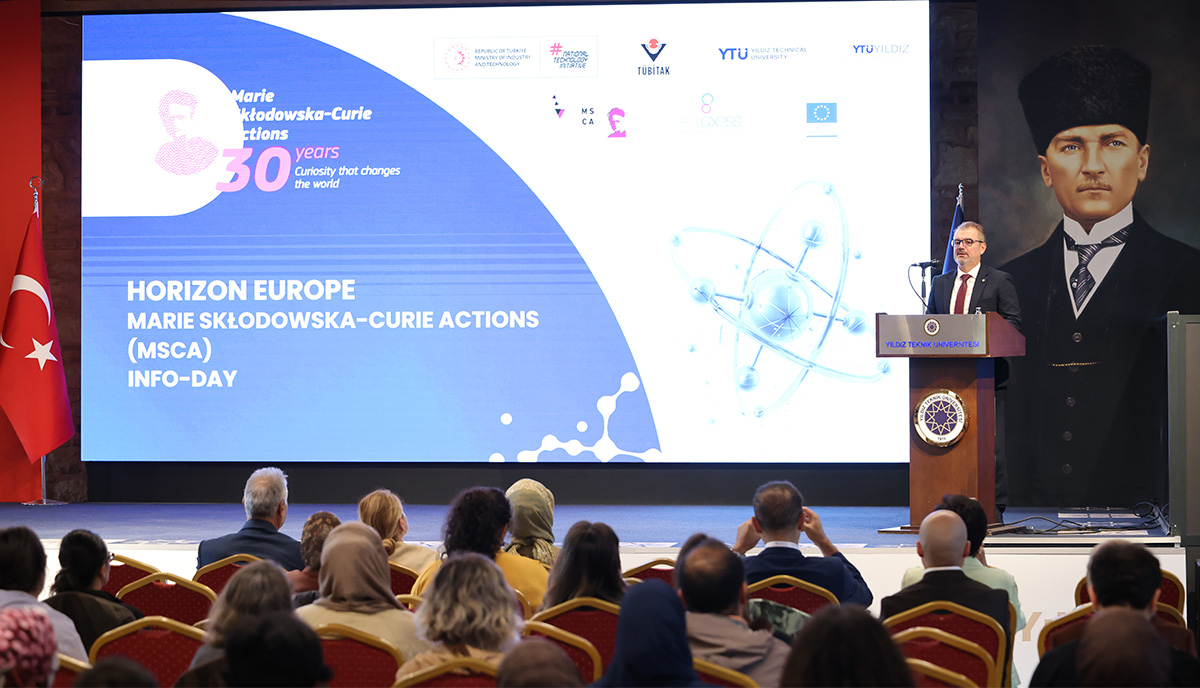
At the Horizon Europe-MSCA Information Day, organized in collaboration with YTÜ and TÜBİTAK, programs that support the international, interdisciplinary, and intersectoral mobility of researchers were discussed. Coinciding with the 30th anniversary of the MSCA, the event provided researchers with information on Doctoral Networks, Postdoctoral Fellowships, Staff Exchanges, and COFUND calls, as well as application processes, forming international consortia, and TÜBİTAK funding opportunities.
Yıldız Technical University (YTÜ) hosted a comprehensive information day on the Marie Skłodowska-Curie Actions (MSCA), part of the European Union’s research and innovation program Horizon Europe.
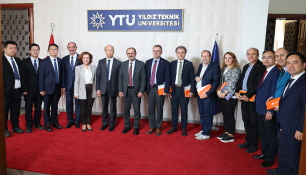
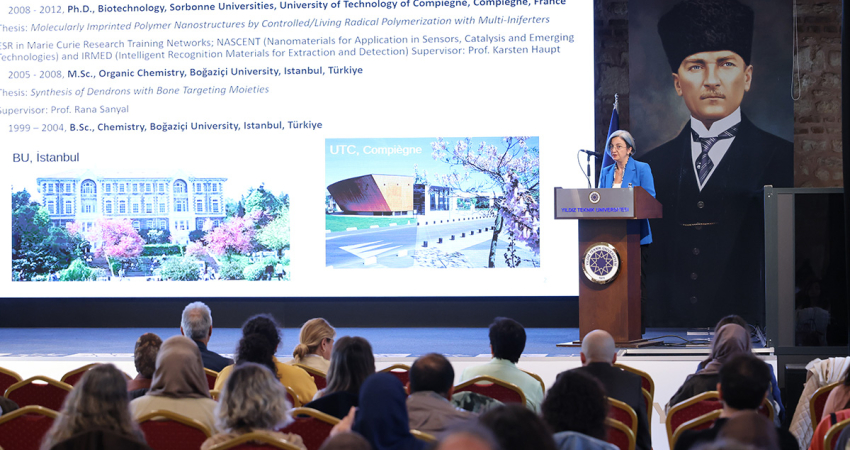
Organized in collaboration between YTÜ and TÜBİTAK at the Historical Hamam Conference Hall on the YTÜ Davutpaşa Campus, the event was attended by Prof. Dr. Özer Çınar, Senior Advisor to the YTÜ Rector and Deputy Chair of the YTÜ Yıldız Technopark Board of Directors, Dr. Burcu Göğüş Doğan, TÜBİTAK’s MSCA National Contact Point and Turkey’s National Expert; Renat Bilyalov, Deputy Head of Unit at the European Research Executive Agency; Prof. Dr. Cengiz Kaya, Deputy General Manager of YTÜ Yıldız Technopark; Prof. Dr. Afşın Yusuf Çetinkaya, Faculty Member in the Department of Environmental Engineering at the YTÜ Faculty of Civil Engineering, Prof. Dr. Esra Çapanoğlu Güven, Faculty Member at Istanbul Technical University, and Prof. Dr. Pınar Çakır Hatır, Faculty Member at İstinye University, as well as academics, researchers, and graduate students from various universities.
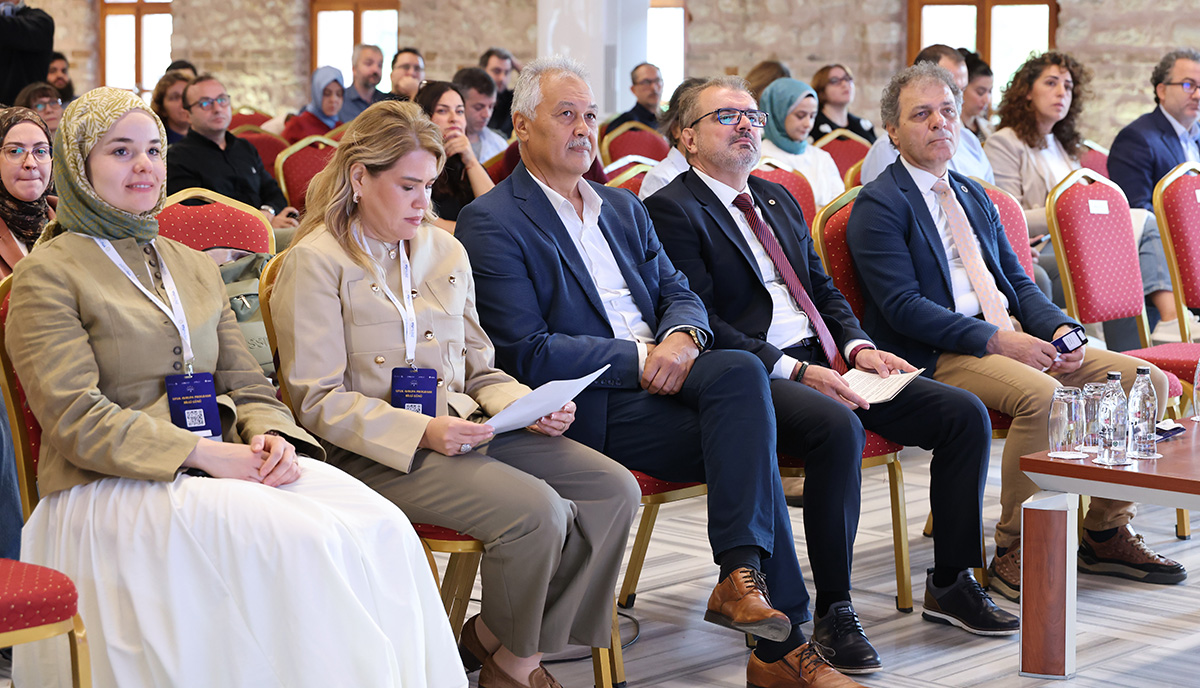
During the information session, the opportunities and application processes offered by the MSCA program—which enables researchers to gain international experience and move across different disciplines and sectors—were discussed in detail.
Researcher mobility takes center stage in the MSCA’s 30th year
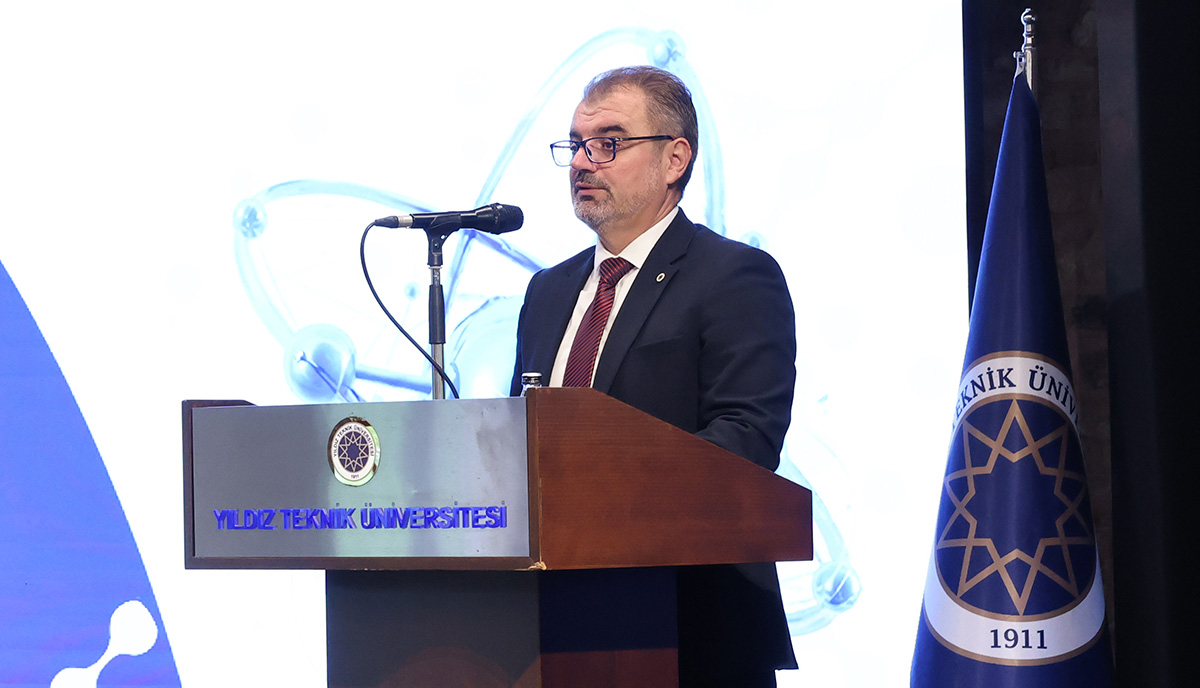
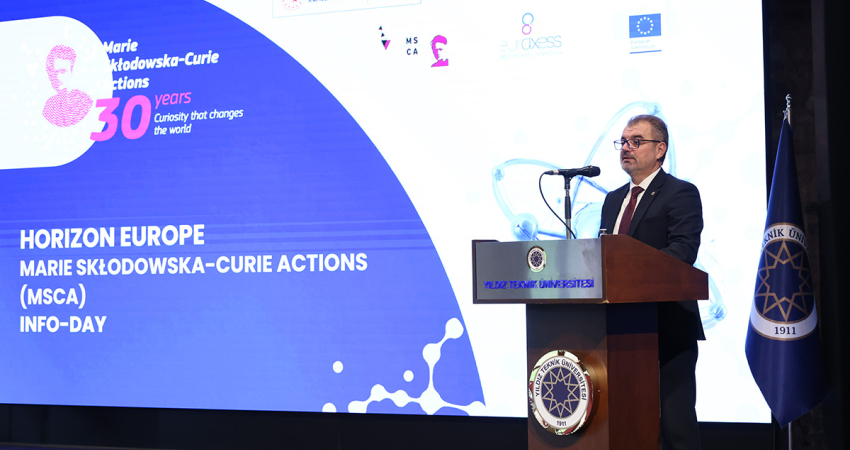
The opening remarks were delivered by Prof. Dr. Özer Çınar, Chief Advisor to the Rector of YTÜ and Deputy Chair of the Board of Directors of Yıldız Technopark. Noting that YTÜ carries its 115 years of knowledge and experience into the future through international research collaborations and scientists, Çınar stated that at the core of the university’s identity as a research institution lies the goal of producing high-quality knowledge and transforming this knowledge into outputs that address humanity’s needs.
Highlighting the importance of the MSCA for researchers’ career development, Çınar noted that the program encourages international, interdisciplinary, and cross-sectoral mobility, stating, “Human resources form the foundation of a university’s research strength. Highly qualified researchers who can engage with different disciplines and have gained international experience are the most important driving forces behind scientific progress,” he said.
Noting that the opportunities the MSCA offers for researchers’ career development have become even more important in its 30th year, Çınar explained that the Doctoral Networks, Postdoctoral Fellowships, COFUND, Staff Exchanges, and MSCA and Citizens programs provide opportunities tailored to different research careers.
YTÜ’s MSCA Experience Shared
Referring to YTÜ’s work under Horizon Europe, Prof. Dr. Çınar shared the university’s experience gained through various MSCA programs with the participants.
Noting that the ECO-SPHERE COFUND Program—coordinated by YTÜ and carried out in collaboration with Dokuz Eylül University—has brought international postdoctoral researchers working in the field of the circular economy to Turkey, Çınar stated that He added that the ESPERANTO and TEAM Doctoral Networks projects, as well as the ICE-LINK Staff Exchanges project, have further strengthened the university’s experience in international research networks.
Çınar noted that the BBGNight-TR project, coordinated by Prof. Dr. Afşın Yusuf Çetinkaya, aims to strengthen the interaction between researchers and society. Noting that the project involves collaboration with Istanbul Technical University, Gazi University, and the Ministry of National Education, Çınar stated that the SHORE and ongoing ECHO projects have also completed their work under the Horizon Europe program.
“Staff Exchanges Lay the Foundation for Long-Term Collaborations”
Emphasizing the importance of institutions learning from one another in the development of international research collaborations, Çınar drew particular attention to the Staff Exchanges call.
Noting that this framework, which enables researchers to work and gain experience at different institutions, contributes not only to joint research but also to the establishment of lasting institutional ties, Çınar said, “International collaborations develop as different institutions learn from one another. Knowledge generated in one laboratory can be advanced through the experience of another research group; a problem encountered in industry, in turn, can become the starting point for a new scientific research project,” he said.
Noting that the International Projects Unit of the YTÜ Technology Transfer Office provides support to researchers—from tracking calls for proposals to identifying partners and developing project proposals—Çınar stated that the Scientific Research Projects Coordination Unit and YTÜ Yıldız Technopark also support international research collaborations and academic-industry connections.
Çınar noted that the primary goal of the information session was to contribute to the emergence of new project ideas and collaborations, stating, “Our expectation from today’s meeting is that the information shared here will lead to new applications and that the connections established will evolve into joint research efforts.”
“Horizon Europe has become the largest research and innovation program in terms of budget”
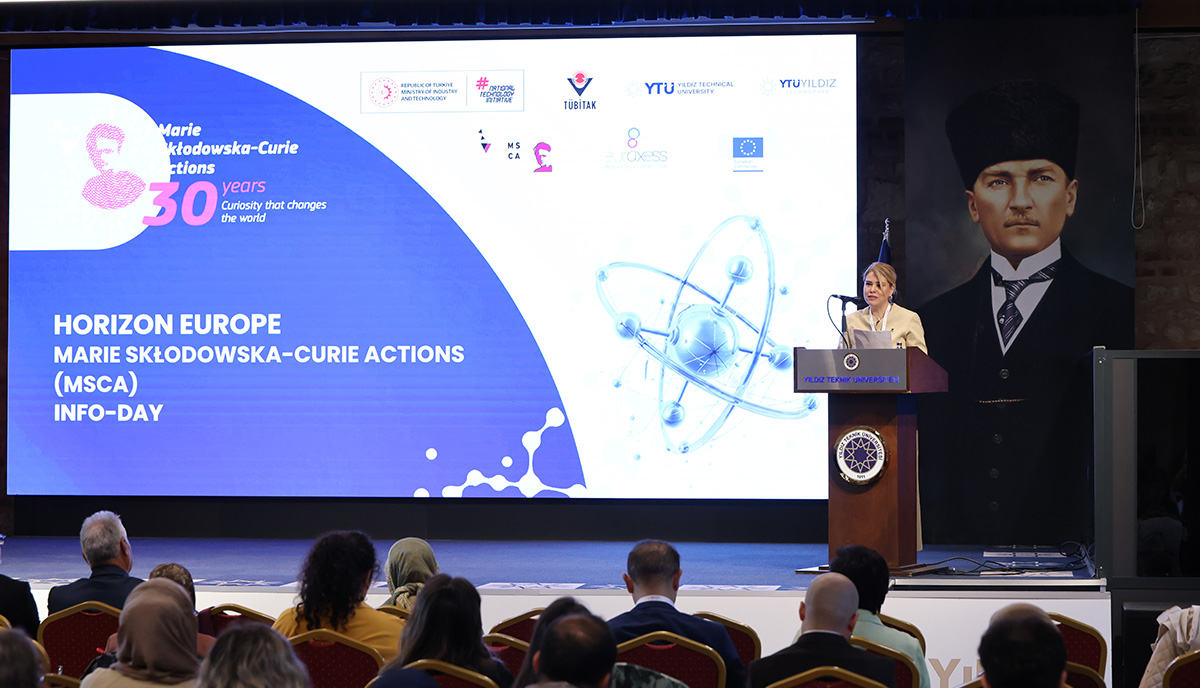
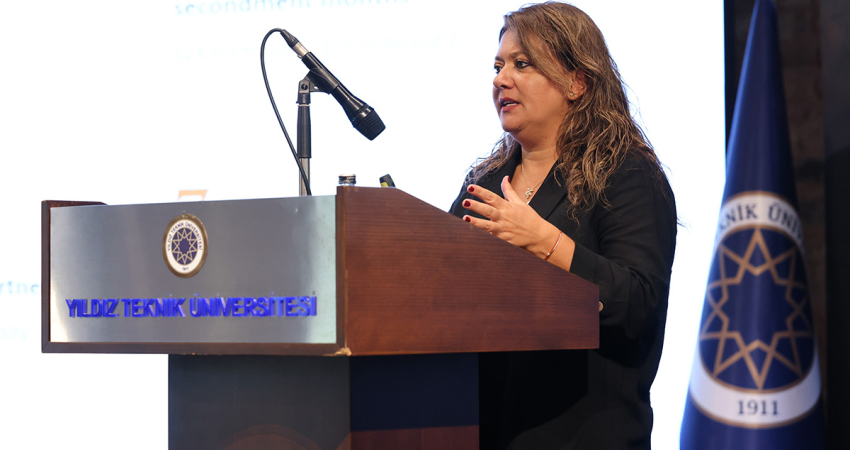
Dr. Burcu Göğüş Doğan, TÜBİTAK’s MSCA National Contact Point and Turkey’s National Expert, also delivered a general presentation on the Horizon Europe and MSCA programs during the event.
Noting that Horizon Europe, with a budget of 95.5 billion euros covering the 2021–2027 period, is the largest research and innovation program to date, Doğan explained the role and key features of the MSCA within this framework.
Noting that the MSCA’s total budget is 6.6 billion euros, Doğan said that what sets the program apart from other Horizon Europe components is that it directly supports researchers’ careers, competencies, and mobility. “Most of Horizon Europe funds projects,” Doğan said. “But the MSCA supports people—their careers, competencies, and freedom of mobility.”
Noting that the MSCA has been supporting researchers’ careers for 30 years through international, cross-sectoral, and interdisciplinary mobility, Doğan explained that there are five core actions: Doctoral Networks, Postdoctoral Fellowships, Staff Exchanges, COFUND, and MSCA and Citizens.
“The idea comes from you”
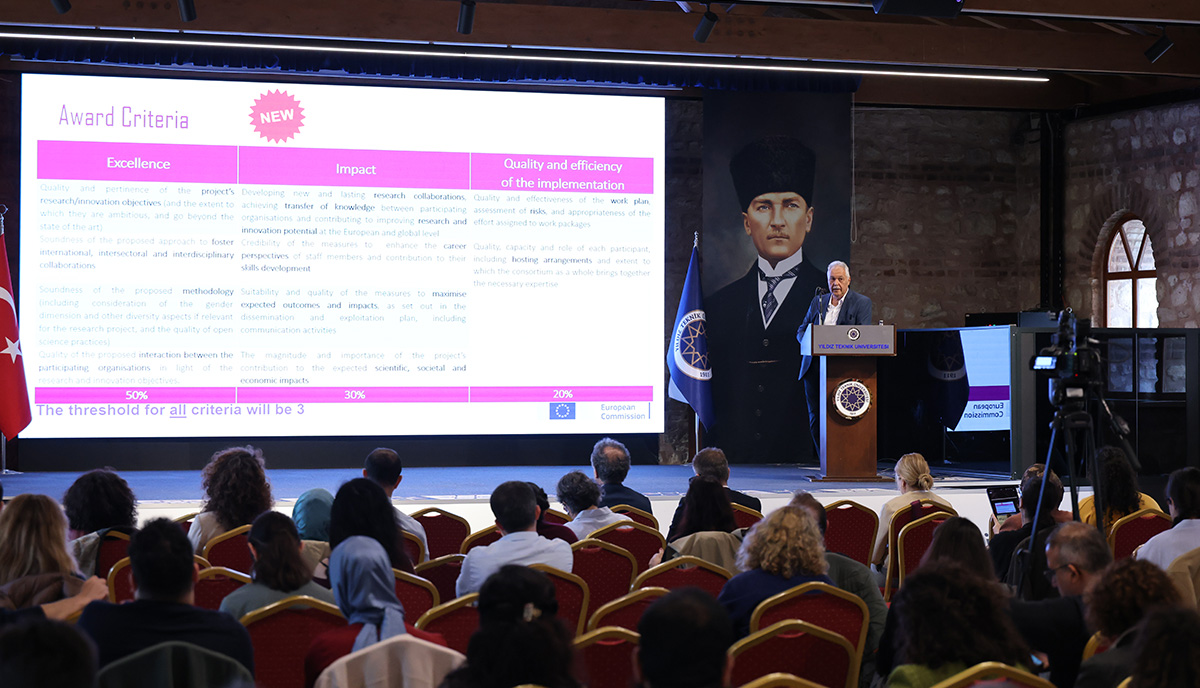
Emphasizing that MSCA programs are not limited to a specific thematic area, Dr. Doğan described the program’s fundamental approach: “There is one key feature common to all five actions: There are no thematic restrictions. The idea comes from you, and the evaluation takes into account excellence, impact, and implementation capacity,” he said.
Noting that Turkey is included in the program with full participant status as an associated country of Horizon Europe, Doğan stated that researchers and institutions in Turkey can participate in calls under the program.
Attention was drawn to YTÜ’s experience with international projects
Doğan noted that YTÜ has gained experience in various MSCA actions, citing the ECO-SPHERE COFUND, ESPERANTO, TEAM Doctoral Networks, ICE-LINK Staff Exchanges, and BBGNight-TR projects as examples.
Doğan emphasized that the fact that the BBGNight-TR project is being carried out under YTÜ’s coordination is particularly significant in terms of institutional capacity, and he highlighted the university’s experience in developing and coordinating international projects.
Doğan noted that YTÜ’s International Projects Unit and the Scientific Research Projects Coordination Office provide support to researchers in the processes of tracking calls for proposals, project development, and partner identification, and added that YTÜ Yıldız Technopark also brings together academic, industrial, and entrepreneurial networks.
International Ph.D. Opportunities with Doctoral Networks
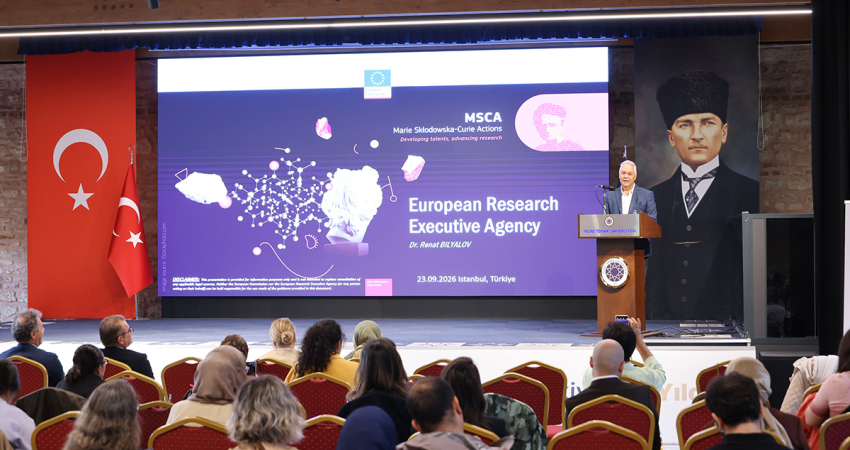
Renat Bilyalov, Deputy Head of the European Research Executive Agency Unit, delivered a comprehensive presentation on the general framework of the MSCA program and, in particular, the calls for proposals under Doctoral Networks and Staff Exchanges.
Noting that the MSCA supports researchers in acquiring skills that will enhance their employability within the European Research Area and helps host institutions attract qualified researchers, Bilyalov stated that the program aims to make the European Research Area stronger and more attractive.
Support for over 80,000 researchers
Bilyalov noted that funding has been provided to more than 80,000 researchers under the MSCA over the past decade, adding that 35,000 of them were doctoral students or doctoral candidates.
Bilyalov noted that the program has also attracted researchers from outside Europe to Europe, adding that 4,500 SMEs and companies have been involved in the programs during this process. Bilyalov reported that the proportion of female researchers across the entire MSCA program has reached 47 percent, and he also noted that the program has contributed to the creation of more than 1,000 doctoral programs in Europe.
Providing information on the MSCA’s impact on researchers’ careers, Bilyalov stated, “According to the data we’ve gathered so far, 95 percent of researchers who receive Marie Skłodowska-Curie grants find employment either during the grant period or within the first two years after completing the grant,” he said.
Three Different Models Under the Doctoral Networks Program
In his presentation, Bilyalov discussed the structure of the Doctoral Networks program in detail and provided information on the standard Doctoral Networks, Industrial Doctorates, and Joint Doctorates models.
Noting that a consortium consisting of at least two beneficiaries must be established under the Doctoral Networks program, Bilyalov said that at least one of these beneficiaries must be from the non-academic sector.
Providing information on the Industrial Doctorates model, Bilyalov said, “The most important condition here is that a researcher hired under such a network must spend at least 50 percent of their time in the non-academic sector. This is one of the fundamental requirements for Industrial Doctorates.”
Regarding the Joint Doctorates model, Bilyalov noted that two or more partners must have an agreement to award joint or multiple doctoral degrees, adding that this model offers researchers the opportunity to earn degrees from more than one institution.
Staff Exchanges and Inter-institutional Mobility
It was reported that under “Staff Exchanges,” another key component of the program, the mobility of research and innovation personnel among universities, companies, and other organizations is supported.
Noting that one of the MSCA’s primary objectives is to enable researchers to gain international and cross-sectoral experience, Bilyalov highlighted the contribution that the sharing of knowledge and experience among different institutions makes to the research ecosystem.
Bilyalov also noted that current data on Turkey’s participation in the MSCA program would be discussed as part of the program and offered assessments regarding Turkey’s position within Horizon Europe.
The BBGNight-TR Project Was Introduced
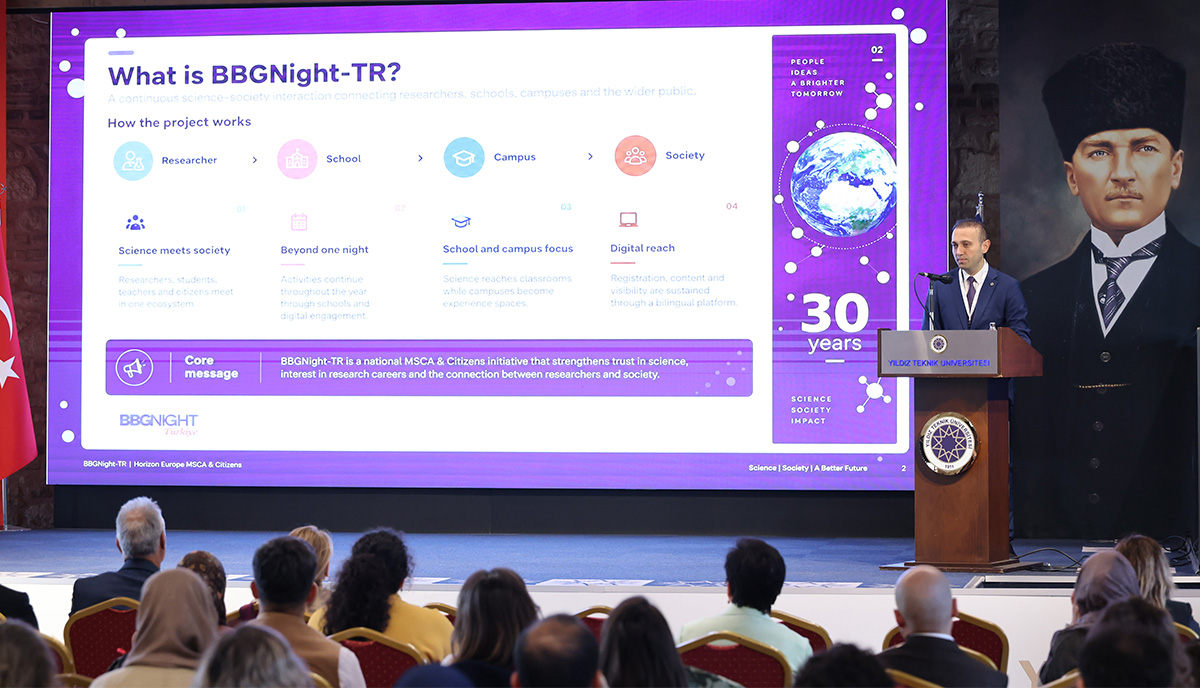
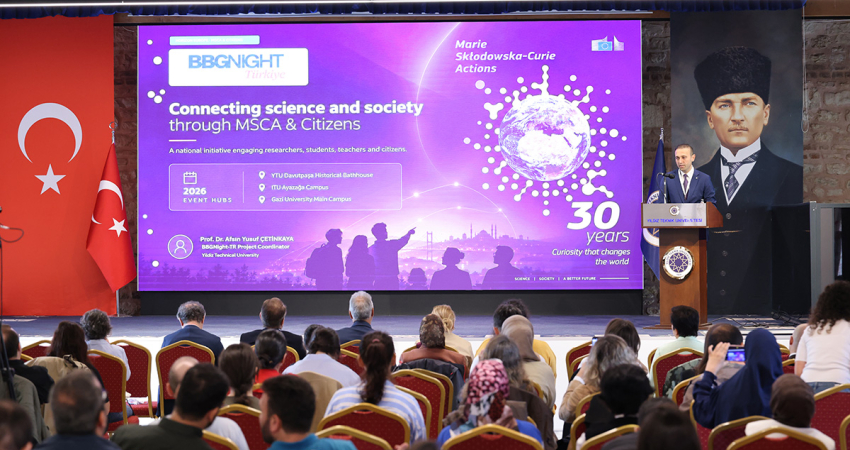
As part of the program, Prof. Dr. Afşın Yusuf Çetinkaya, an Assistant Professor in the Department of Environmental Engineering at the Faculty of Civil Engineering at YTÜ, presented the BBGNight-TR project, which he coordinates.
Sharing the approach developed under the project—which aims to strengthen interaction between researchers and society—with the participants, Çetinkaya provided information on YTÜ’s experience within the MSCA and Citizens programs.
Çetinkaya stated that BBGNight-TR brings together researchers, students, and various segments of society on topics such as climate change, health, and digital transformation.
New Project and Collaboration Opportunities for Researchers
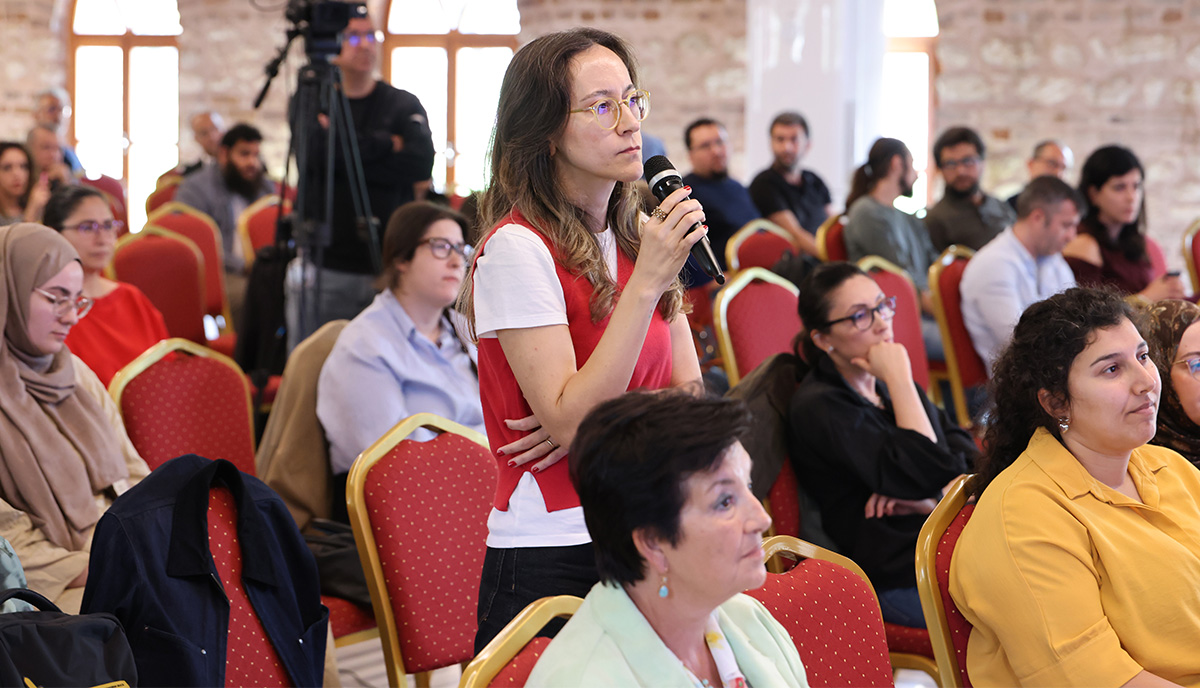
The Horizon Europe – MSCA Information Day continued with question-and-answer sessions, expert panel discussions, and networking opportunities. As part of the program, participants had the opportunity to communicate directly with international project experts, develop project ideas, and establish new partnerships.
Information was shared at the event regarding Doctoral Networks, Postdoctoral Fellowships, Staff Exchanges, and COFUND calls, as well as forming international consortia, application processes, and the advisory and support mechanisms TÜBİTAK offers to researchers.
Organized in collaboration between YTÜ and TÜBİTAK, the event served as a common platform for sharing knowledge and experience aimed at strengthening researchers’ access to international research networks and transforming new project ideas into collaborations.

Other News