






YTU has certified its energy management system to the ISO 50001 standard
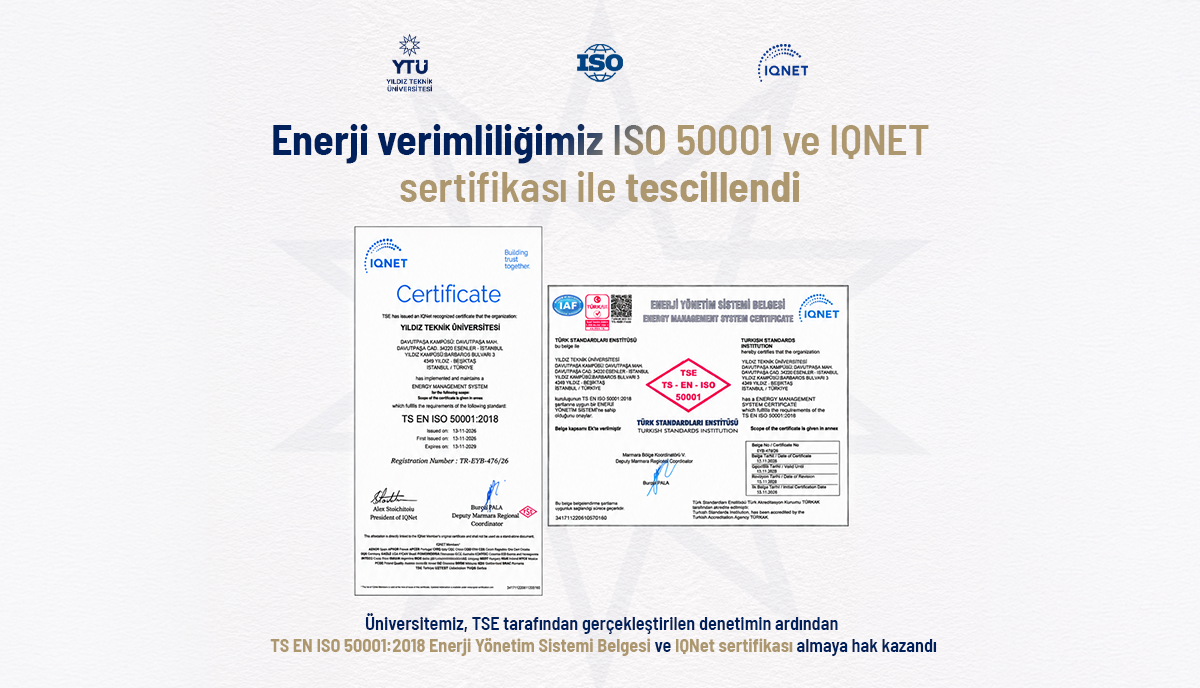
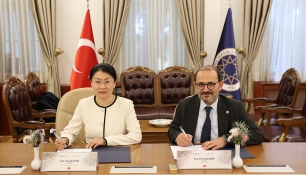
Yıldız Technical University has obtained certification for its energy management system in accordance with an international standard. Following the certification process conducted by the Turkish Standards Institute (TSE), the “TS EN ISO 50001:2018 Energy Management System Certificate” and the associated IQNET certificate were issued in the name of YTÜ.
Yıldız Technical University (YTÜ) earned the ISO 50001 Energy Management System Certificate as a result of efforts led by the Energy Management Coordination Office. Following the certification audit conducted by TSE, the “TS EN ISO 50001:2018 Energy Management System Certificate” dated November 13, 2026, along with the IQNET certificate, was issued on behalf of the university.
This certification demonstrates that YTÜ’s energy management system complies with the standard’s requirements while supporting the university’s efforts to monitor energy consumption, identify opportunities for improvement, and continuously enhance energy performance.
A three-year certification cycle will be followed
The certificate, issued by TSE under number “EYB-476/26,” is valid until November 13, 2029. The certificate’s validity is contingent upon continued compliance with certification requirements and the successful completion of surveillance audits.
Under the international certification network IQNET, of which TSE is a member, the “TR-EYB-476/26” certificate issued in conjunction with TSE certification supports the international recognition of the certification among IQNET member organizations.
During the three-year certification cycle, surveillance audits will be conducted in the first and second years following certification. In the third year, a recertification audit will be conducted before the certificate’s validity period expires.
Energy management efforts were carried out under the leadership of the Energy Management Coordination Office
The certification process was coordinated by the YTÜ Energy Management Coordination Office (EYK), which carries out activities aimed at the effective, efficient, and sustainable use of energy across all YTÜ campuses.
The work was carried out under the coordination of YTÜ Energy Management Coordinator Assoc. Prof. Dr. Ali Durusu and Deputy Coordinator Dr. Tayfur Gökçek. Coordinators Hakan Çalışkan, Tolgahan Atabay, and Yusuf Pehlivanoğlu worked in collaboration with relevant units, particularly the Quality Coordination Office and the Directorate of Construction and Technical Affairs.
As part of this process, the YTÜ Energy Policy was published under the philosophy of “a university that both manages and teaches energy.” The Energy Management System (EnYS) was integrated with YTÜ’s existing ISO 9001 Quality Management System (QMS).
As a result of the energy review, 11 buildings at the Davutpaşa Campus, falling under the Public Buildings Energy Efficiency Project (KABEV), were identified as key energy consumption areas. These areas were addressed in efforts to monitor energy consumption and evaluate opportunities to improve energy performance.
Energy consumption is measured and monitored
Electricity and natural gas consumption at the university is tracked using central meter data. Data obtained from electricity energy analyzers in the buildings and the building automation system are also used in energy management efforts.
Energy performance is evaluated using energy reference curves based on regression analysis and energy performance indicators. This method allows for the examination of changes in consumption in conjunction with the conditions affecting energy use and enables the monitoring of the results of implemented improvements.
In this context, operating instructions, operational control forms, and annual maintenance plans were prepared for key equipment such as boilers, chillers, heat pumps, and ventilation systems. Following an internal audit and a management review meeting, the system was prepared for the certification audit.
New energy performance targets were set
Objectives, targets, and action plans covering the 2026–2027 period were prepared to ensure the continuous improvement of energy performance.
In the coming period, the goals include expanding the use of automation and sensor applications in lighting, regulating the operating hours of systems and equipment associated with significant energy consumption through automation, and improving maintenance and repair processes.
Increasing the use of renewable energy through the Davutpaşa Campus rooftop solar power plant (GES) project is also among the planned initiatives. The goal is to strengthen energy management practices through training and awareness campaigns for building energy managers.
YTÜ’s Sustainability Initiatives
Yıldız Technical University continues its efforts in the areas of energy efficiency, effective use of natural resources, and waste management in line with its goal of a sustainable campus.
As part of the Zero Waste Project since 2018, YTÜ has established a Zero Waste Management System at the Davutpaşa Campus. By developing strategies for effective waste management, reducing waste generation, and separating waste at the source, YTÜ became the first public university in Istanbul to qualify for the Zero Waste Certificate.
YTÜ strengthened its position among the top 50 universities by rising to 45th place globally in the 2026 UI GreenMetric Sustainable University Rankings. The university was also recognized by the UI GreenMetric Sustainable University Rankings Network as “The Most Active University in Turkey.”
Continuing its upward trend in the QS 2027 World University Sustainability Rankings, YTÜ ranked 390th globally and 5th in Turkey. In the rankings, which evaluated 2,003 universities worldwide, the university—which was ranked 406th the previous year—climbed 16 spots. YTÜ’s total sustainability score rose from 72.6 to 76, marking an increase of 3.4 points.
The QS evaluation also assessed the university’s performance in the areas of environmental responsibility, academic research, knowledge sharing, and social contribution. With its ISO 50001 Energy Management System Certification, YTÜ has documented the energy management aspect of its efforts toward a sustainable campus in accordance with international standards.
About the ISO 50001 Energy Management System Standard
Published by the International Organization for Standardization (ISO), ISO 50001 defines the requirements for organizations to establish, implement, maintain, and continuously improve their energy management systems. Energy performance encompasses energy efficiency, energy use, and energy consumption.
First published in 2011 and revised in 2018, the standard is implemented in Turkey as “TS EN ISO 50001:2018.” An amendment related to climate action was also published in 2024.
Based on the Plan-Do-Check-Act (PDCA) cycle, the standard calls for establishing an energy policy, setting objectives, measurable energy targets, and action plans, as well as measuring and monitoring progress and evaluating results.
This approach aims to prevent energy waste, reduce energy costs and greenhouse gas emissions associated with energy use, and support compliance with applicable legal and other requirements. The regular evaluation of energy data and the monitoring of improvement activities are among the system’s key elements.
ISO 50001, which shares a common management system structure with ISO 9001 and ISO 14001, can be implemented in an integrated manner with these management systems.
Other News