




















The initial results from the new student-centered survey system were reviewed by the Quality Committee
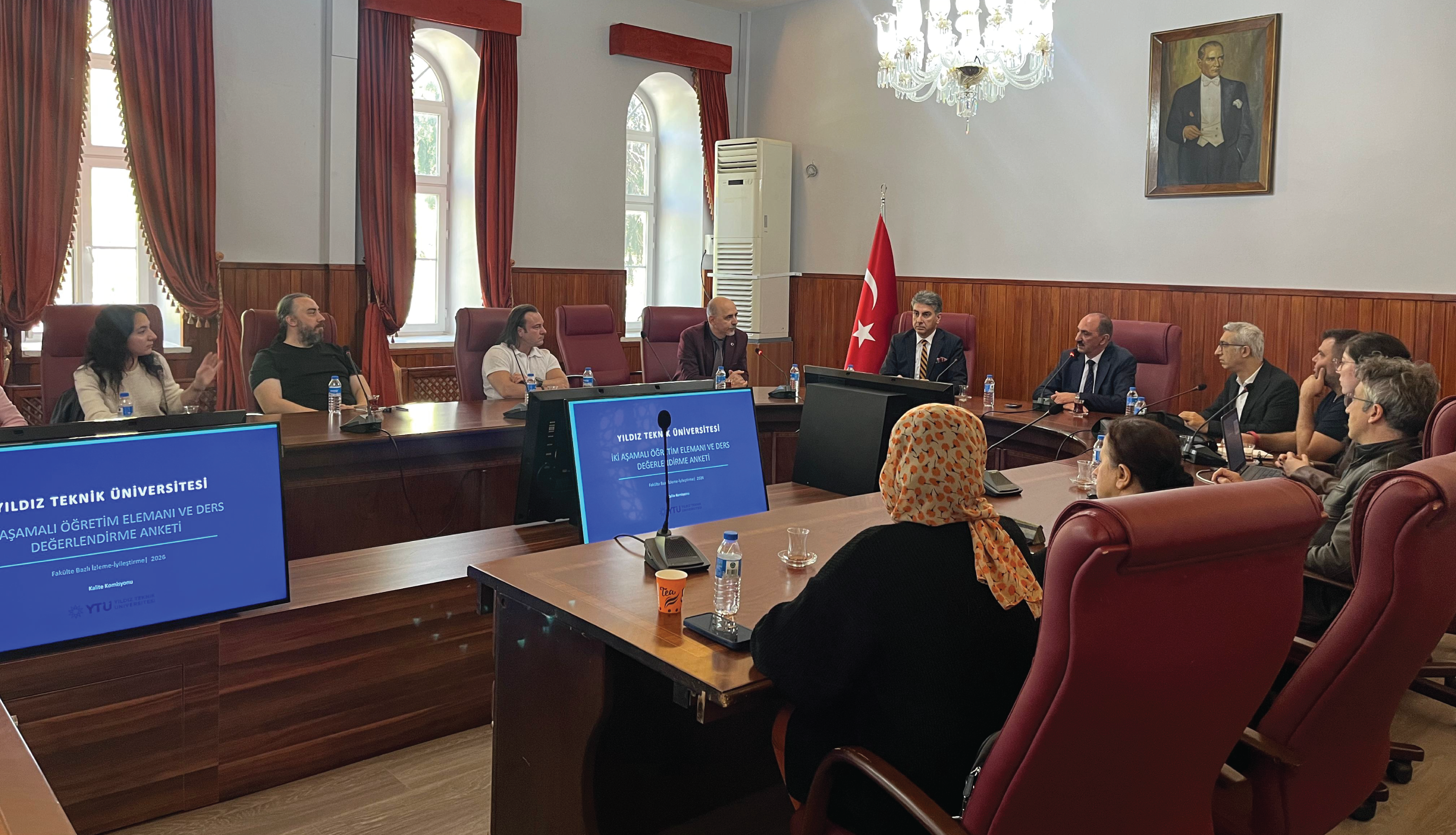
The first results of the new student-centered survey system at Yıldız Technical University have been received. The data obtained from the surveys, which were conducted in two phases during the Fall Semester of the 2025-2026 Academic Year, were reviewed by the University Quality Commission following evaluations by department and faculty councils. The reports prepared at the end of the process will be sent to the faculties to initiate improvement measures.
Following changes made by the Yıldız Technical University Rectorate to student evaluation processes, the initial results of the new survey system have entered the evaluation phase. Feedback received from students was reviewed by the University Quality Commission with the aim of making concrete decisions to enhance the quality of education and teaching.
The new system, implemented under the coordination of the YTÜ Vice Rectorate for Education and Teaching and the Education Commission, began to be applied as of the Fall Semester of the 2025-2026 Academic Year. With the changes implemented by a Senate decision, student surveys—which were previously conducted through a single form—have been divided into two separate phases.
Student feedback is now integrated into the quality cycle
With the new survey system, student feedback is no longer treated merely as satisfaction data collected at the end of the term. The results obtained have been integrated into a regular evaluation process extending from department councils to faculties, from faculties to the Office of the Vice Rector for Education and Teaching, and to the University Quality Commission.
Through this structure, students’ views on courses, teaching processes, assessment methods, and the educational environment have become a direct component of institutional quality processes. With the process defined as a unit activity within the Integrated Quality Management System (BKYS), the tracking and reporting of feedback have also been institutionally ensured.
With the first system, students’ experiences during the course period and their overall evaluations at the end of the term began to be collected in separate phases. In this context, the first survey was conducted on a voluntary basis between November 12–24, 2025, following the midterm exams. The second survey was completed between January 10 and February 3, 2026, following the final exams. This made it possible to measure students’ in-semester observations and their overall evaluations at the end of the term under separate headings.
The results will be returned to the faculties as a mandate for improvement
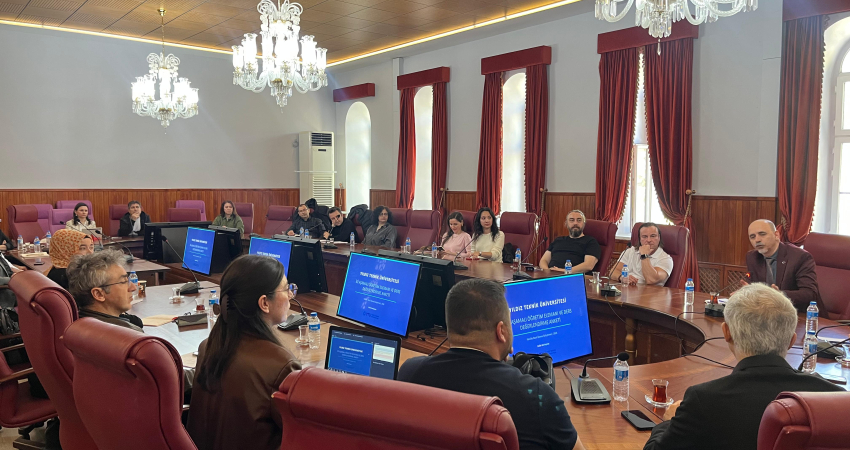
At a meeting coordinated by YTÜ Vice Rector Prof. Dr. Vatan Karakaya, representatives from institute and faculty councils discussed how the survey results would be implemented on the ground. The meeting evaluated the key areas where student feedback was concentrated, the specific fields within departments and faculties where improvements could be made, and how these steps would be monitored.
In line with the reports discussed by the Quality Commission, the identified areas for development will be communicated to the relevant faculties. The faculties will be asked to re-examine the results pertaining to their units and initiate the necessary corrective and improvement activities. The process will be monitored through the deans’ assistants and faculty members assigned to this task.
A four-stage evaluation process has been established
In the new system, data obtained from student surveys is managed through a four-stage evaluation process. In the first stage, survey results are reviewed by department and faculty councils. Subsequently, evaluations prepared by the faculties are submitted to the Vice Rectorate for Education and Teaching. These reports are discussed by the University Quality Commission, and improvement priorities are identified. In the final stage, the decisions are sent to the relevant faculties, and steps for implementation on the ground are initiated.
Student feedback is more visible in decision-making processes
With the new system, student feedback is tracked in accordance with the Plan-Do-Check-Act (PDCA) cycle—the core cycle of quality systems—and is securely converted into actionable data. University administration aims to regularly monitor student opinions through the new survey system, use the results obtained from surveys as an improvement activity for the university, and ensure that students play a more active and visible role in university decision-making processes.
Other News