






Our Rector Discussed Efforts to Transition to an AI-Based Digital University at Our School of Architecture

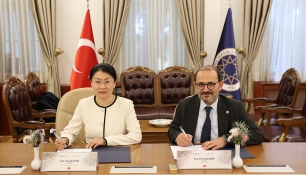
Our Rector, Prof. Dr. Eyüp Debik, made his first faculty visit to the Faculty of Architecture as part of a series of visits he initiated to discuss the transition to an AI-based digital university and to gather feedback from our faculty members. Emphasizing the importance of AI-based management, education, and research systems, our Rector also listened to the academic and physical needs of our faculty.
Our university’s efforts to transition to an AI-based digital university were discussed at the meeting held at our Faculty of Architecture. At the meeting chaired by our Rector, Prof. Dr. Eyüp Debik, the goals of the 2026–2030 Strategic Plan, the future of our educational programs, and infrastructure investments to support digital transformation were evaluated.
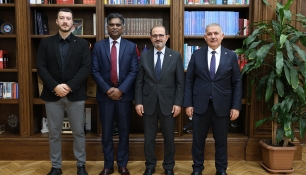
The meeting was attended by our Vice Rector for Education and Teaching, Prof. Dr. Vatan Karakaya; our Vice Rector for Administration, Prof. Dr. Ahmet Göksel Ağargün; our Secretary General Ahmet Yüksel Karahan, and our Assistant Secretary General responsible for the Beşiktaş Yıldız Campus, İsmail Doğukan Erzurum. Our Dean of the Faculty of Architecture, Prof. Dr. Sırma Turgut, the faculty administration, the department chairs of Architecture, Urban and Regional Planning, and the Preservation and Restoration of Cultural Heritage, as well as our faculty members, also attended the meeting.

The management and research dimensions of digital transformation were discussed
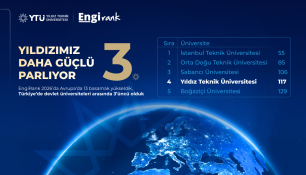
At the beginning of the meeting, our Rector, Prof. Dr. Eyüp Debik, reiterated our university’s goal of ranking among the top 100 universities worldwide and emphasized the importance of our faculties’ and academic units’ contributions to this goal. He explained, one by one, the systems encompassing everything from quality management to education, and from research to university-industry collaboration, within the scope of digital transformation.
In this context, our Rector spoke about the Artificial Intelligence-Based Integrated Quality Management System (BKYS 2.0) and shared the work being done to digitize our quality processes. He also addressed the topics of the AI-Based R&D and Research Portal and the AI-Supported University-Industry Collaboration Portal, outlining our goals regarding the use of artificial intelligence in our research activities and industry collaboration processes.
Our Rector also provided information about DataHub, which aims to integrate our institutional data into a unified structure. He assessed the efforts aimed at ensuring data integrity across our university’s digital systems.

Next-Generation Teaching System and the Integration of Artificial Intelligence in Education
Speaking about the Next-Generation Teaching System (YNÖS) under the heading of “Digital Transformation in Education,” our Rector outlined the goals for restructuring our educational processes. Discussions were held with our faculty members regarding the integration of artificial intelligence into the education system and the widespread adoption of digital classrooms.
In line with our university’s goals for digitalization and AI-driven transformation, it was noted that comprehensive revisions to our educational programs may be on the agenda next year. In this context, our faculties and departments were asked to begin the necessary preparations.
The creation of course syllabi supported by artificial intelligence and the development of joint course planning among our faculties were also on the meeting’s agenda. It was emphasized that a common and holistic approach to course planning is being targeted across the university, and our departments and faculty members were asked to support efforts in this direction.
It was emphasized that new educational models emerging in higher education must be evaluated now. The discussion focused on simplifying education, revising our programs to meet current needs, and strengthening interdisciplinary collaboration.
The Infrastructure of Digital Transformation: The Data Center
Our Rector, Prof. Dr. Eyüp Debik, discussed data center initiatives—which encompass server, data storage, and processing infrastructure for digital systems and artificial intelligence applications—under a separate heading. Improvements to the internet and hardware infrastructure were also discussed at the meeting. The technical capabilities required by our faculty for digital education and research processes were evaluated, and the expectations of our faculty members were heard.

Our Faculty’s Academic and Spatial Needs Were Assessed
Issues related to the academic and administrative processes of our Faculty of Architecture were also brought up at the meeting. Our faculty’s spatial needs, infrastructure problems encountered in education and research activities, and hardware requirements were conveyed to our Rector, Prof. Dr. Eyüp Debik.
Requests regarding the reduction of student quotas in our Department of Conservation and Restoration of Cultural Heritage were evaluated. Discussions were held regarding support for our research projects, resource availability, and the administrative and financial support needed by our faculty. Information was provided on various support mechanisms and application channels regarding access to research resources.
Faculty visits will continue until December 7
Our Faculty of Architecture administration and faculty members expressed their support for our university’s goals of digital transformation and the integration of artificial intelligence into education. They stated that they are ready to contribute to transformation efforts in line with our faculty’s academic structure and educational profile.
The purpose of the faculty visits is to share the steps toward transitioning to an AI-based digital university with our academic units, gather feedback and suggestions from our faculty members, and assess educational and research needs. The visits will be completed on December 7, 2026.
Other News