



























The Future of Research: From Data to Impact Was Discussed at Yıldız

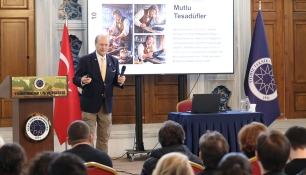
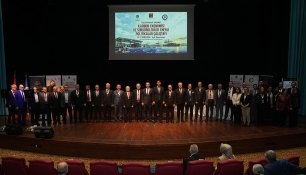
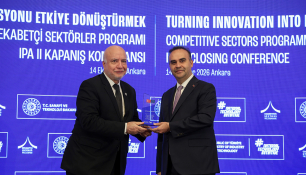
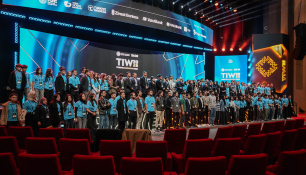
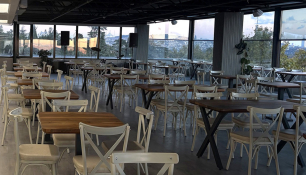
Hosted by Yıldız Technical University in collaboration with Elsevier, the “Tomorrow Today in Research 2026 Turkey” event, held on June 18 at the Historic Hamam Cultural Center on YTÜ’s Davutpaşa Campus, explored the future of academic research through the lens of digitalization and artificial intelligence.
One of the most prestigious series of regional academic conferences, Tomorrow Today in Research (TTIR) 2026, was held this year under the theme “From Data to Impact: Redesigning the Research Ecosystem Through Digital Transformation,” brought together academics, university administrators, and research experts on a common platform to discuss artificial intelligence, data analytics, and strategic partnerships that are shaping the future of global academic excellence. The program, which featured a packed agenda, provided an in-depth examination of how digitalization and artificial intelligence technologies are reshaping the world of scientific research.

"We prioritize quality in academic performance by encouraging high-impact publications"
Prof. Dr. Güleda Engin, YTÜ’s Vice Rector for Research and Planning, delivered the opening remarks and shared with participants the university’s recent data-driven transformation initiative. Touching on the strategic background of these efforts, Engin detailed the key factors driving institutional progress.
Prof. Dr. Güleda Engin explained that software systems operating independently within the university have been integrated into a single data backbone, creating an evidence-based, transparent decision-making infrastructure.
Noting that a newly established coordination office has taken charge of managing the process, Engin said, “By collecting institutional data in a centralized system, we have established a traceable structure. Thanks to this infrastructure, we base our strategic decisions entirely on concrete data.”
Emphasizing a fundamental shift in academic evaluation criteria, Engin stated that they are focusing on qualitative depth rather than quantitative volume.
Emphasizing that high-impact publications have become the primary criterion in incentive and academic promotion processes, he continued: “With our interdisciplinary research groups, our expanding budget, and our culture of international projects, we are taking our research capacity to the next level. By combining this solid infrastructure with cross-border collaborations, the recruitment of qualified talent, and strong patent performance, we are strengthening our global network."
Rapid Rise in Global Rankings
The tangible successes of YTÜ’s data-driven academic strategy have been reflected in the reports of international higher education ranking organizations. According to data from the recently announced QS 2027 World University Rankings, Yıldız Technical University climbed 102 spots this year, ranking 634th globally. Looking at the past two years, the university—which first climbed from the 851–900 range to the 731–740 range and then to 634th place—has shown a total rise of 242 places over the past two years. The university’s success was also reflected in other global rankings. YTÜ, which was in the 1001+ range in the 2022 Times Higher Education rankings, has since risen to the 601–800 range as of 2026. The university also maintained its position as 48th globally and 2nd in Turkey on the GreenMetric platform, which evaluates green campus and sustainability criteria.

Other Presentations of the Day
Speaking during the morning sessions of the event, Başak Candemir, Director of Business Development for Analytics and Data Services at Elsevier, addressed the evolving roles of higher education institutions in regional development and transformation processes.
Prof. Dr. Gökmen Zararsız, Dean of Research at Erciyes University, discussed the institutional dynamics of data-driven research management, while Harun Elkıran, a faculty member at Istanbul Technical University and data science expert, shared the innovations and impacts that generative artificial intelligence brings to scientific research processes.
In the afternoon sessions, Dr. Nil Girgin, Dean of Research at Bahçeşehir University, explained research governance models based on the SciVal and Pure systems, while Elsevier representative Yasemin Solay outlined the stages of digitization in academic evaluation, promotion, and faculty hiring processes for the participants.
Academic Reliability and the Risk of Hallucinations
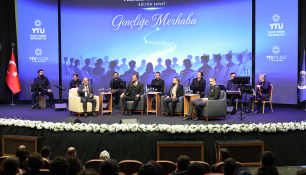
The most comprehensive segment of the program was the panel titled “The Future of Academic Research: Artificial Intelligence and Sustainability,” moderated by YTÜ Rector’s Advisor Assoc. Prof. Dr. Ümit Güneş. The panel featured Prof. Dr. Bilge Gökçen Röhlig, Education Coordinator at Istanbul University; Assoc. Prof. Dr. Süha Tuna, Program Coordinator at the Institute of Information Technologies at Istanbul Technical University; and Prof. Dr. Mehmet Sağlam, Vice Rector at İnönü University, as speakers.
During the session, the impact of artificial intelligence technologies on scientific research—including the speed they bring as well as their effects on academic reliability and sustainability—was discussed from multiple perspectives. The tendency of AI models to generate erroneous or fabricated information (hallucinations), the risks of creating fake sources, and the misleading effects of these situations on researchers and students were addressed. Experts explored ways for scientists to protect themselves from such technical errors and the possibilities of verifying generated sources using technological tools.
While it was emphasized that critical thinking and source verification skills must be prioritized in education, methods for students to benefit from these technologies without compromising their own cognitive abilities were discussed. In disciplines directly related to human health—such as dentistry—where there is no margin for error, the panel discussed how to balance the advantages offered by AI-supported diagnostic systems with potential risk factors.
In the panel’s discussion on institutional policy and sustainability, the high energy and computational costs of large AI models were examined, and an assessment was made of whether smaller, optimized models could serve as a sustainable alternative. It was noted that universities should guide these technologies within a responsible and ethical framework rather than banning them. Furthermore, it was noted that academic incentive systems must shift from a focus on quantity to a focus on quality, and attention was drawn to the risk that inequalities in access to advanced AI tools among institutions could create a new divide in the scientific community.


Other News