


























YTÜ Yıldız Technopark and the Istanbul Chamber of Industry (ISO) Launch a High-Value-Added Manufacturing Initiative: Industrial Design and Prototyping Center Opens

Academics, entrepreneurs, and industrialists will come together at the same center
The Industrial Design and Prototyping Center (ETP), launched through a collaboration between Yıldız Technical University, YTÜ Yıldız Technopark, and the Istanbul Chamber of Industry with an investment of approximately 5 million euros, was unveiled at a launch event. The center, which will manage the entire process from the concept stage to mass production under one roof, aims to strengthen university-industry collaboration and contribute to high-value-added production.
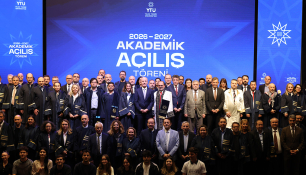
The Industrial Design and Prototyping Center (ETP), established through a collaboration between Yıldız Technical University (YTÜ), YTÜ Yıldız Technopark, and the Istanbul Chamber of Industry (ISO), was unveiled at a ceremony held at Otağ-ı Hümayun on the YTÜ Davutpaşa Campus. Realized with an investment of approximately 5 million euros, the center will bring together academics, industrialists, entrepreneurs, and students within the same production ecosystem, providing end-to-end support from the idea stage through prototyping, testing, commercialization, and mass production.
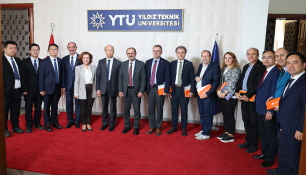
The launch was attended by Istanbul Governor Davut Gül, Yıldız Technical University Rector Prof. Dr. Eyüp Debik, Istanbul Chamber of Industry Board Chairman Erdal Bahçıvan, YTÜ Yıldız Technopark General Manager Assoc. Prof. Dr. Muhammet Garip, as well as Provincial Director of National Education Assoc. Prof. Dr. Murat Mücahit Yentür and Istanbul Development Agency (İSTKA) Secretary General Ziya Taşkent.
Istanbul Governor Davut Gül: “Knowledge must come together with design to become a product”
Delivering the opening remarks at the event, Istanbul Governor Davut Gül noted that Turkey has made significant progress in the fields of education and industry, adding that industry-university collaboration is not limited to mere reciprocal visits.
Recalling that there were only 55 mechanical engineers in the country during the early years of the Republic, Gül noted that today there are 59 universities and over 1 million students in Istanbul.
Highlighting the transformation in Turkey’s exports, Gül stated, “While the 1976 industrial inventory listed exports of tahini halva and a few household appliances, today we are a country with exports exceeding $400 billion, including the service sector.”
Emphasizing that institutions such as the Industrial Design and Prototyping Center are true examples of university-industry collaboration, Gül highlighted the importance of knowledge merging with design to transform into a product, and then being manufactured and marketed. Noting that academia and industry have much to learn from one another, Gül said that projects that appear successful in theory may not always yield commercial results in practice.
YTÜ Rector Prof. Dr. Debik: “We Must Develop High-Value-Added Products”
Prof. Dr. Eyüp Debik, Rector of Yıldız Technical University, emphasized that university-industry collaboration is a strategic necessity for Turkey to achieve its high-value-added production goals, stating, “Today, the countries driving technological transformation worldwide are those that can bring academia and industry together around a common goal. With this understanding, we are opening our Industrial Design and Prototyping Center not only to our university but to the entire industrial ecosystem.”
Emphasizing that even researchers who have completed their doctoral studies need the support of the academic ecosystem to keep up with scientific developments and develop new technologies, Debik said, "Academics are the most important actors who closely monitor global scientific and technological developments and who generate and transform knowledge. For this reason, the connection between R&D centers and universities must be further strengthened. The industry needs the university, and the university needs the industry," he said.
Noting that the center will serve not only entrepreneurs within the university but all industrial organizations, Prof. Dr. Debik said, “We are working with many of our stakeholders—including ASKON, the Istanbul Chamber of Commerce, and organized industrial zones—to ensure this infrastructure can be utilized by a broader range of users. The more effectively this center is utilized, the more our country’s capacity to develop high-value-added products will increase. We invite our industrialists, entrepreneurs, and manufacturers to take advantage of these opportunities. Every project developed here will contribute to our country’s competitive strength and technological independence,” he said.
ISO President Bahçıvan: “ETP Will Drive a Qualitative Leap in Exports”
Erdal Bahçıvan, Chairman of the Board of Directors of the Istanbul Chamber of Industry, also stated that the center’s primary goal is to enhance the industry’s design capabilities, accelerate the process from idea to product, and create a robust ecosystem that will enable high-value-added production.
Noting that the center has entered a new phase thanks to the collaboration established with Yıldız Technical University and YTÜ Yıldız Technopark, Bahçıvan said, “Today, we define ETP not merely as a prototyping center, but as a ‘product development ecosystem,’ an ‘innovation factory,’ and a ‘product development center from idea to market.’ Here, entrepreneurs, academics, and industrialists come together around the same table to bring technological innovation to life.”
Emphasizing that the center, with its new structure, is positioned within the university with an integrated approach, Bahçıvan said, “We positioned ETP not as an industrial zone or a production facility, but specifically as an integrated structure within the university. From day one, our goal has not been to increase production, but to develop new products. Because, from our perspective, the university serves as a hub where new knowledge is generated, research is conducted, curiosity is encouraged, new technologies take root, future engineers are trained, and access to the most valuable knowledge is provided. “Within this framework, we will be completing one of the most critical components in the commercialization of the developed products and their transformation into economic value through Yıldız Technopark, which plays a vital role in converting academic knowledge into technology and commercial value,” he stated.
Noting that the center houses advanced production infrastructure such as metal additive manufacturing systems, SLS, SLM, FDM, and SLA technologies, five-axis CNC machining centers, laser and waterjet cutting systems, and woodworking technologies, Bahçıvan said, “The added value created by the designs developed using this technological infrastructure will increase the economic value of products and enable a qualitative leap in our exports. At the same time, by reducing our companies’ product development costs, it will make a significant contribution to our country’s competitive strength,” he said.
Emphasizing that the center will boost Turkey’s competitiveness by reducing companies’ product development costs, Bahçıvan thanked the Ministry of Industry and Technology, the project partners, and KOSGEB for their support in bringing the center to life.
YTÜ Yıldız Technopark General Manager Garip: “The center brings together different stakeholders under one roof”
YTÜ Yıldız Technopark General Manager Assoc. Prof. Dr. Muhammet Garip noted that the most important feature of the Industrial Design and Prototyping Center is its multi-layered and collaborative structure, stating, “This center is not merely a prototyping space; it is a comprehensive innovation ecosystem that supports every stage from the moment an idea is conceived to the commercialization process. Our goal is to transform knowledge from an output that remains on the shelf into a product, and the product into economic value.”
Garip noted that the center brings together industrialists, entrepreneurs, academics, students, developers, and project teams under one roof, adding, “Innovation gains momentum only through the collaboration of different disciplines. This center offers a powerful collaboration platform where different stakeholders can pool their collective wisdom to turn their ideas into prototypes much more quickly and develop them together. A very broad spectrum of people—from our entrepreneurs to TEKNOFEST teams, and from our students to our academics—will benefit from this infrastructure,” he said.
Noting that rapid prototyping and product development processes are among the industry’s most critical needs, Garip said, “Today, many entrepreneurs face challenges in prototyping and revision processes within an industrial structure focused on mass production. Trial production, testing, and design revisions—which are particularly needed in high-tech sectors, especially the defense industry—will be carried out much more quickly thanks to this center. This will significantly shorten the time it takes for ideas to become products,” he said.
Emphasizing that the center will also make significant contributions to Turkey’s competitive strength, Garip said, “Global competition is now measured not only by production capacity but also by the speed of innovation. If we can bring together the knowledge generated at universities with the production power of industry on the same platform, we can develop high-value-added products much more quickly. Our Industrial Design and Prototyping Center will be one of the key building blocks of this transformation.”
Following the opening remarks, the program concluded with the official ribbon-cutting ceremony marking the launch of the ETP Center and a tour of the facility.


Other News